
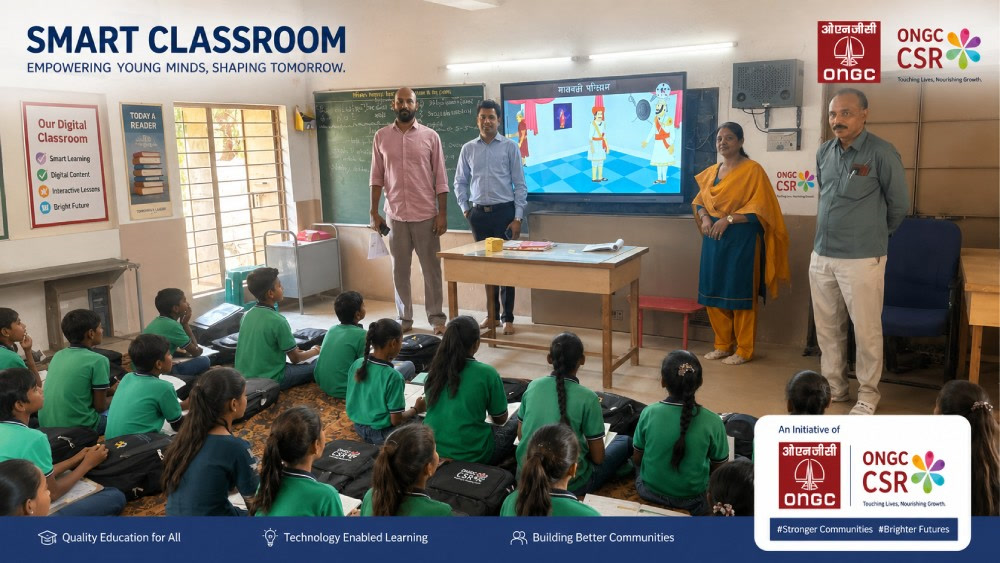
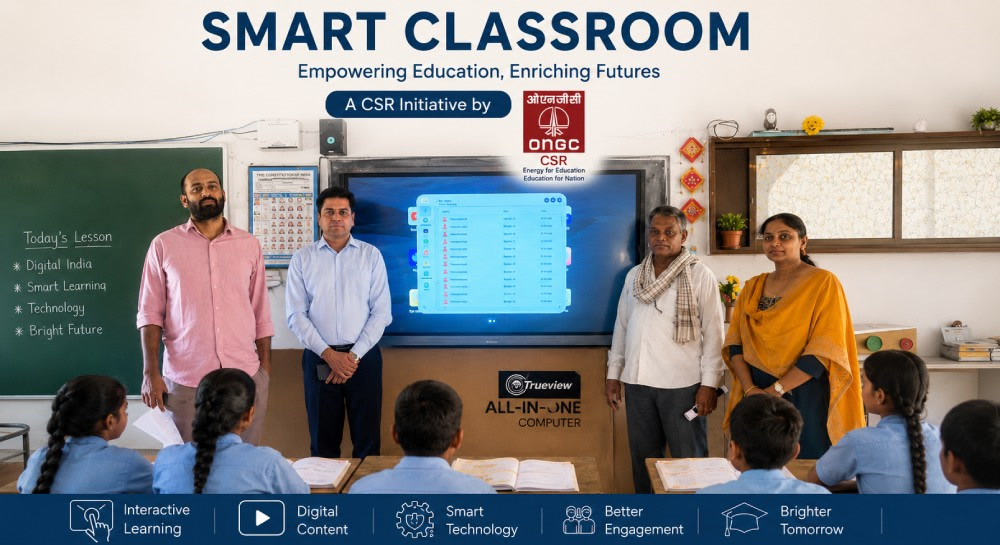
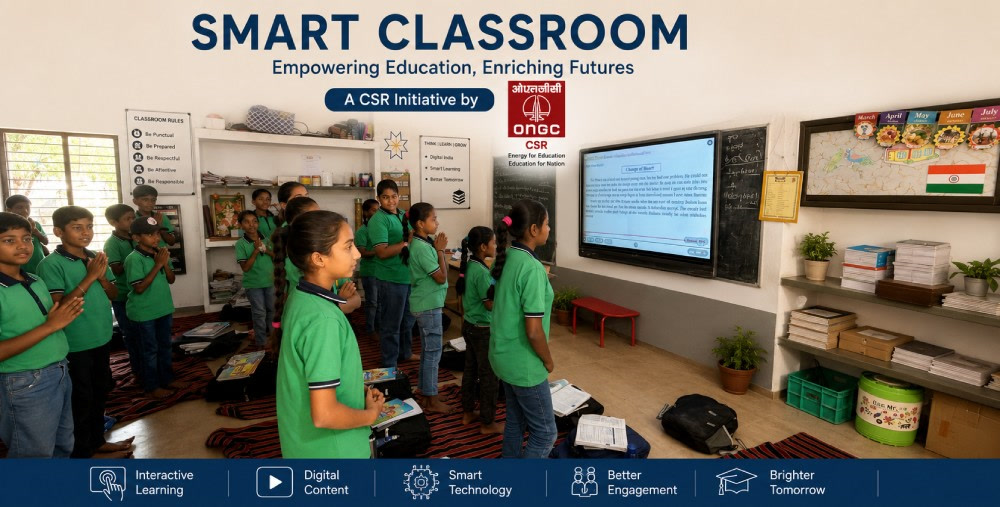
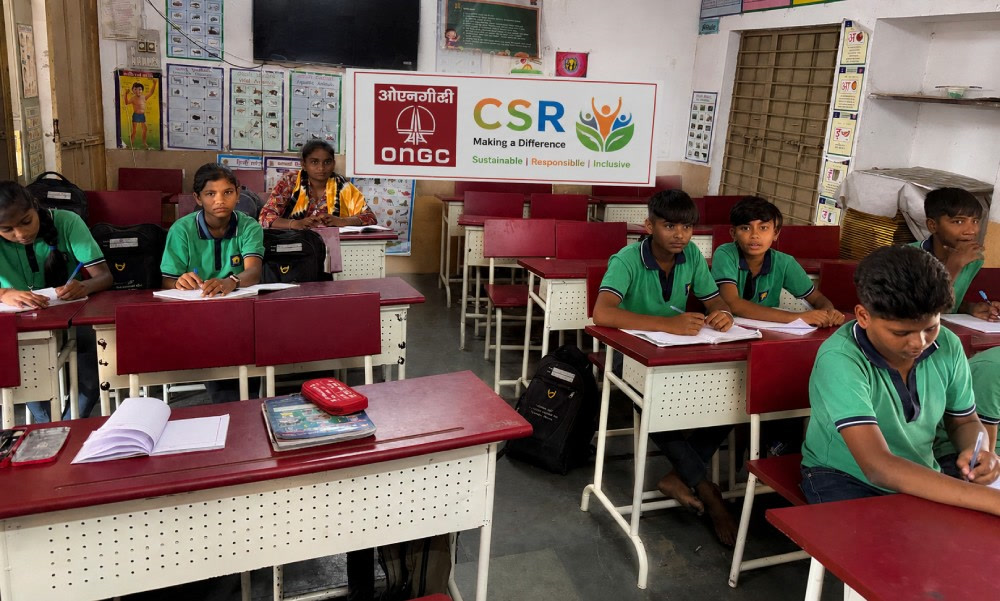
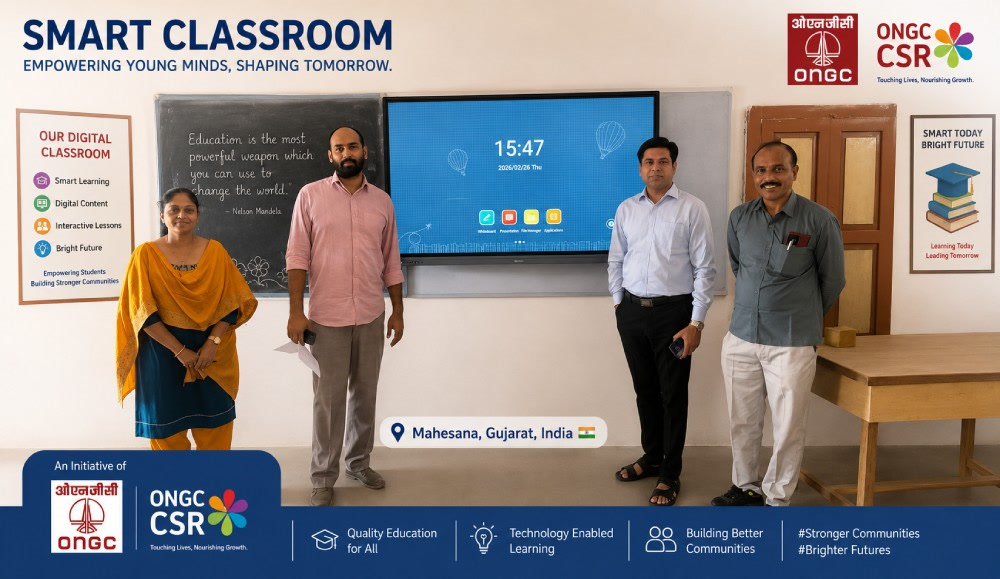
Education is the foundation of a progressive society, and access to modern learning
facilities plays a vital role in improving the quality of education in rural areas. To
bridge the digital divide and create an engaging learning environment for students, a
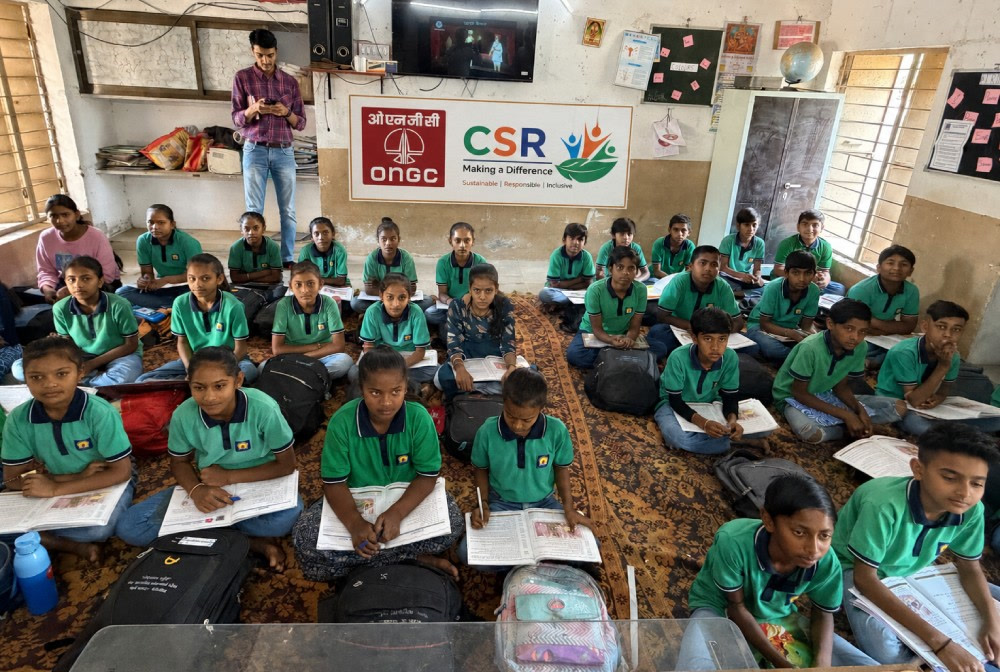
Smart Classroom Project was implemented at Sobhasan Primary School, Village
Sobhasan, Taluka Mehsana, District Mehsana under Corporate Social Responsibility
(CSR) support.
The project was implemented by Gramin Vikas Trust with the objective of
transforming traditional classrooms into technology-enabled learning spaces. The
initiative aims to enhance teaching effectiveness, improve student participation, and
provide access to digital educational resources that support modern teaching
methodologies.
The project was successfully executed during the period from 23 July 2025 to 31
December 2025 and was completed on 31 December 2025.
Government schools in rural areas often face challenges in providing technology-
based education due to limited infrastructure and resources. Teachers rely heavily
on conventional teaching methods, which may not always effectively communicate
complex concepts to students.
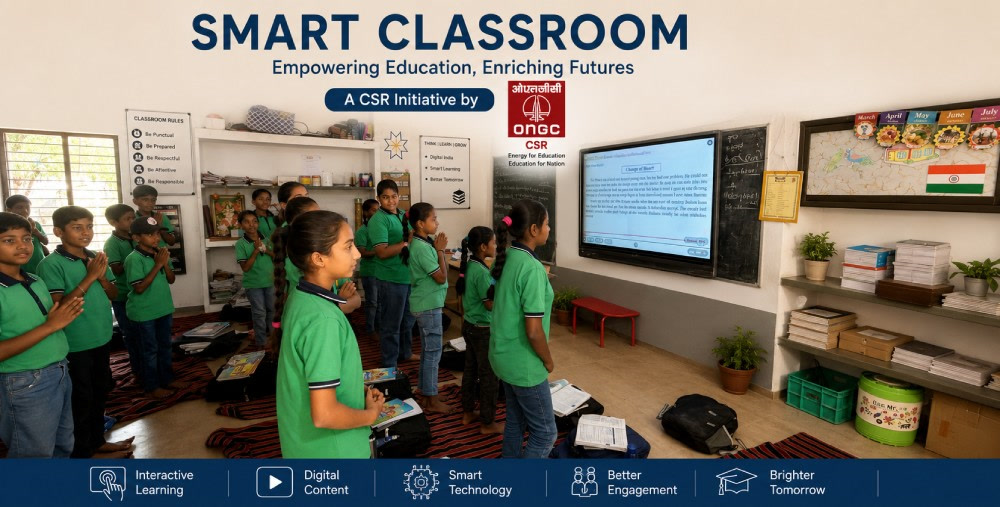
Recognizing the need for digital learning tools, Sobhasan Primary School requested
support for establishing a Smart Classroom facility. The project was designed to
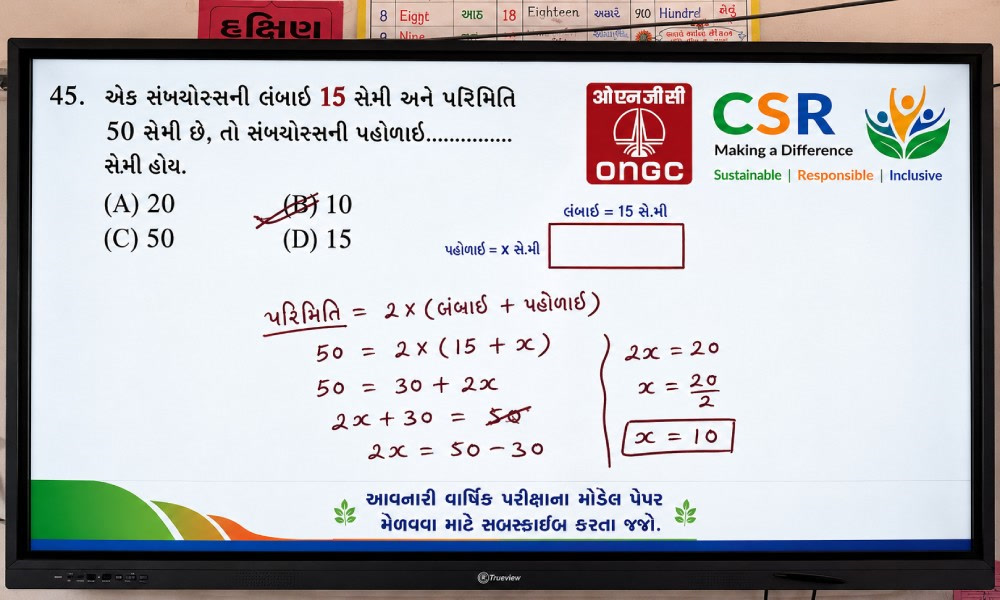
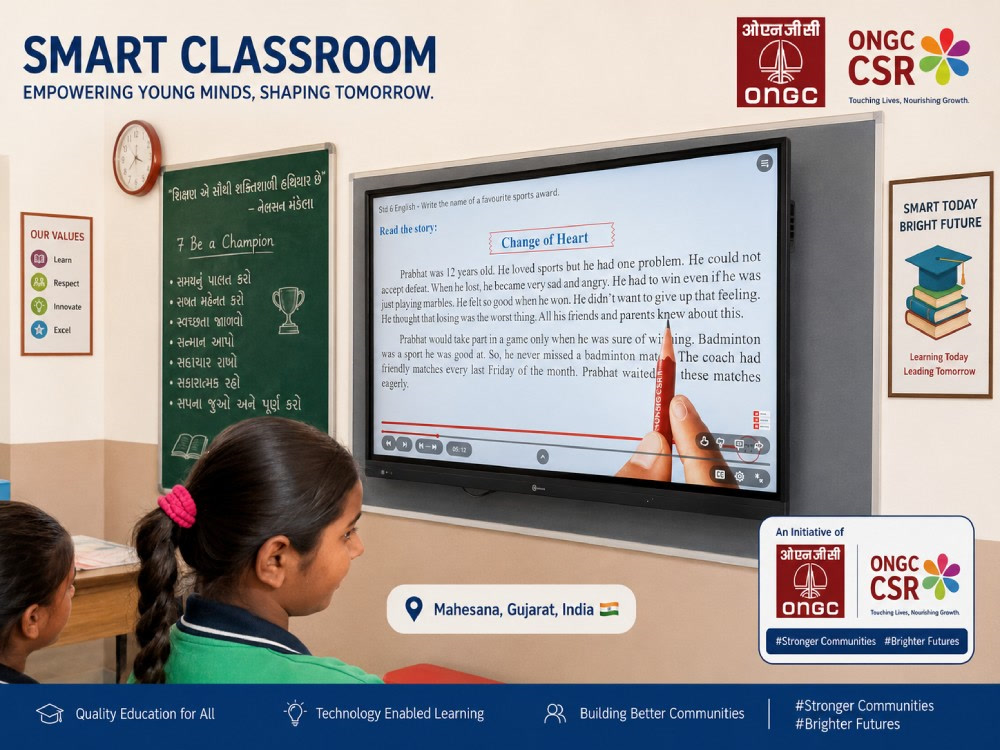
create an interactive learning environment where students can learn through audio-
visual content, digital presentations, educational videos, animations, and interactive
learning applications.
The Smart Classroom initiative aligns with the broader goal of improving educational
outcomes, increasing student engagement, and preparing rural students for a
technology-driven future.
The major objectives of the Smart Classroom Project were:
The Smart Classroom was established with modern educational equipment and digital infrastructure suitable for effective classroom teaching. The implementation process included assessment of school requirements, procurement of equipment, installation, testing, and orientation for teachers.
Key activities undertaken under the project included:
The project was implemented with active cooperation from the school management, teachers, village representatives, and community members, ensuring smooth execution and long-term sustainability.
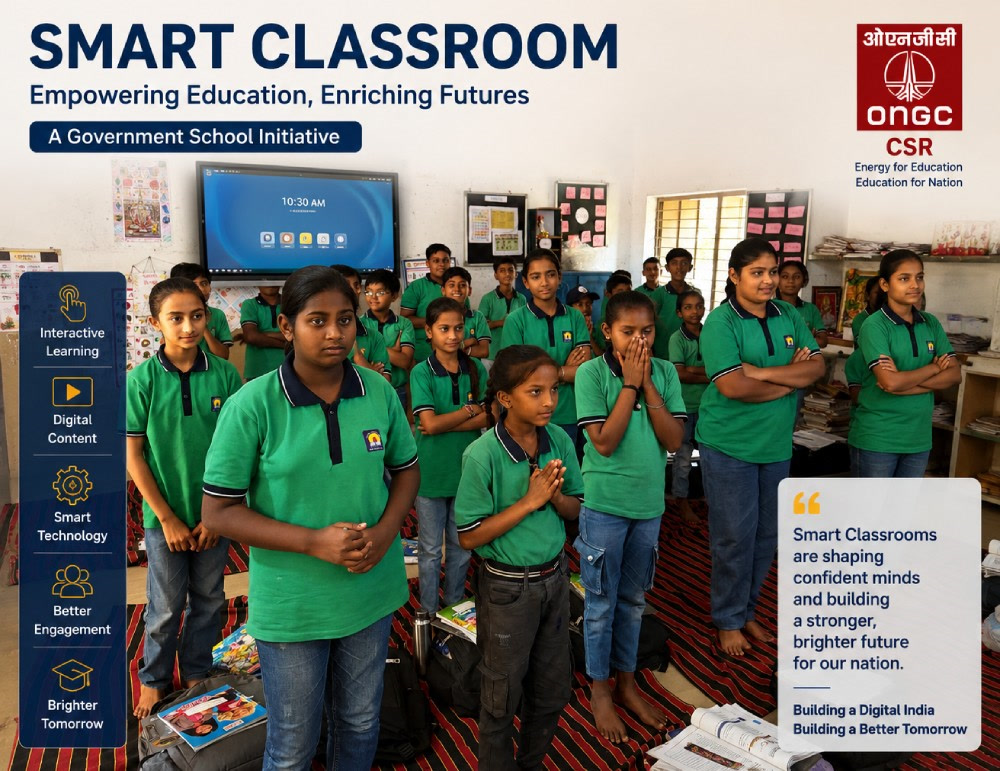
The Smart Classroom Project has significantly enhanced the educational environment at Sobhasan Primary School. Students now have access to visually rich and interactive learning materials that make classroom sessions more engaging and effective.
Digital content and visual presentations help students understand concepts more easily compared to traditional teaching methods.
Interactive lessons encourage greater participation, curiosity, and classroom involvement among students.
Teachers can effectively explain complex subjects using videos, animations, diagrams, and presentations.
Students gain familiarity with technology at an early age, helping them develop essential digital skills.
A modern classroom environment motivates students to attend school regularly and participate actively in educational activities.
The Smart Classroom facility serves as a sustainable educational resource that will benefit future batches of students for many years.
The success of the project was made possible through the collaborative efforts of
Gramin Vikas Trust, the school administration, village community, and local
stakeholders. Teachers have been encouraged to integrate digital learning into their
daily teaching practices, ensuring optimal utilization of the facility.
The school management has also committed to maintaining the equipment and
infrastructure to ensure uninterrupted use of the Smart Classroom in the future.
The Smart Classroom Project at Sobhasan Primary School represents a significant
step toward strengthening rural education through technology. By providing modern
digital learning facilities, the project has created opportunities for students to learn
more effectively, develop technological awareness, and enhance their academic
performance.
This initiative demonstrates the positive impact of CSR investments in education and
highlights the importance of creating innovative learning environments that empower
students and contribute to the overall development of rural communities. The project
will continue to benefit hundreds of students and support quality education in
Sobhasan village for years to come.
Gramin Vikas Trust is a non-government organization established in 2003, registered under the Society Registration Act 1860 and the Public Charitable Trust Act 1950. Founded by a dedicated team of trustees from diverse professional backgrounds, including business, education, and public service, the Trust is united by a common goal: to educate and empower rural communities.

Gramin Vikas Trust, Veer Annex,
1st Floor B/h Circuit House, Abu Highway,
Palanpur : 385001 Dist- Banaskantha,
Gujarat(India)